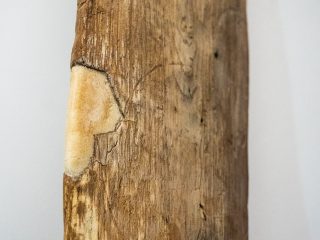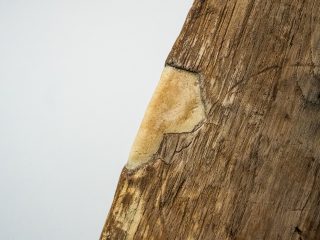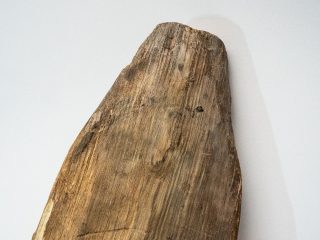
Here is a genuine rarity: an oar dating back some 6,000 years. It comes from the Neolithic village of Palù di Livenza, now recognised as a UNESCO World Heritage Site. And it is no coincidence that an artefact depicting water and boats should come from a place whose name contains the word ‘marsh’ (in Friulian dialect, ‘palût’).
It has survived to the present day thanks to the extraordinary microclimatic conditions of the site: an oxygen-free aquatic environment that prevented the decomposition of a perishable material such as wood. It is a simple yet exceptional artefact that provides a valuable insight into everyday life in the Neolithic period.