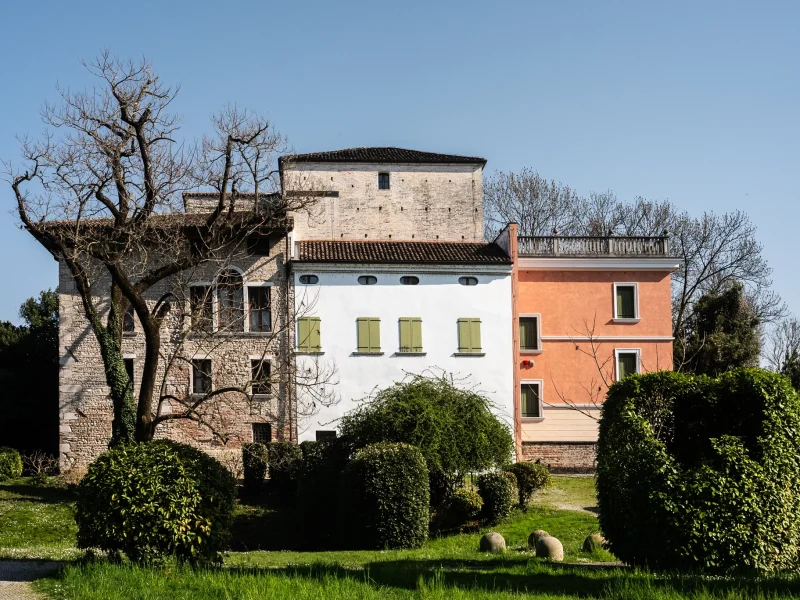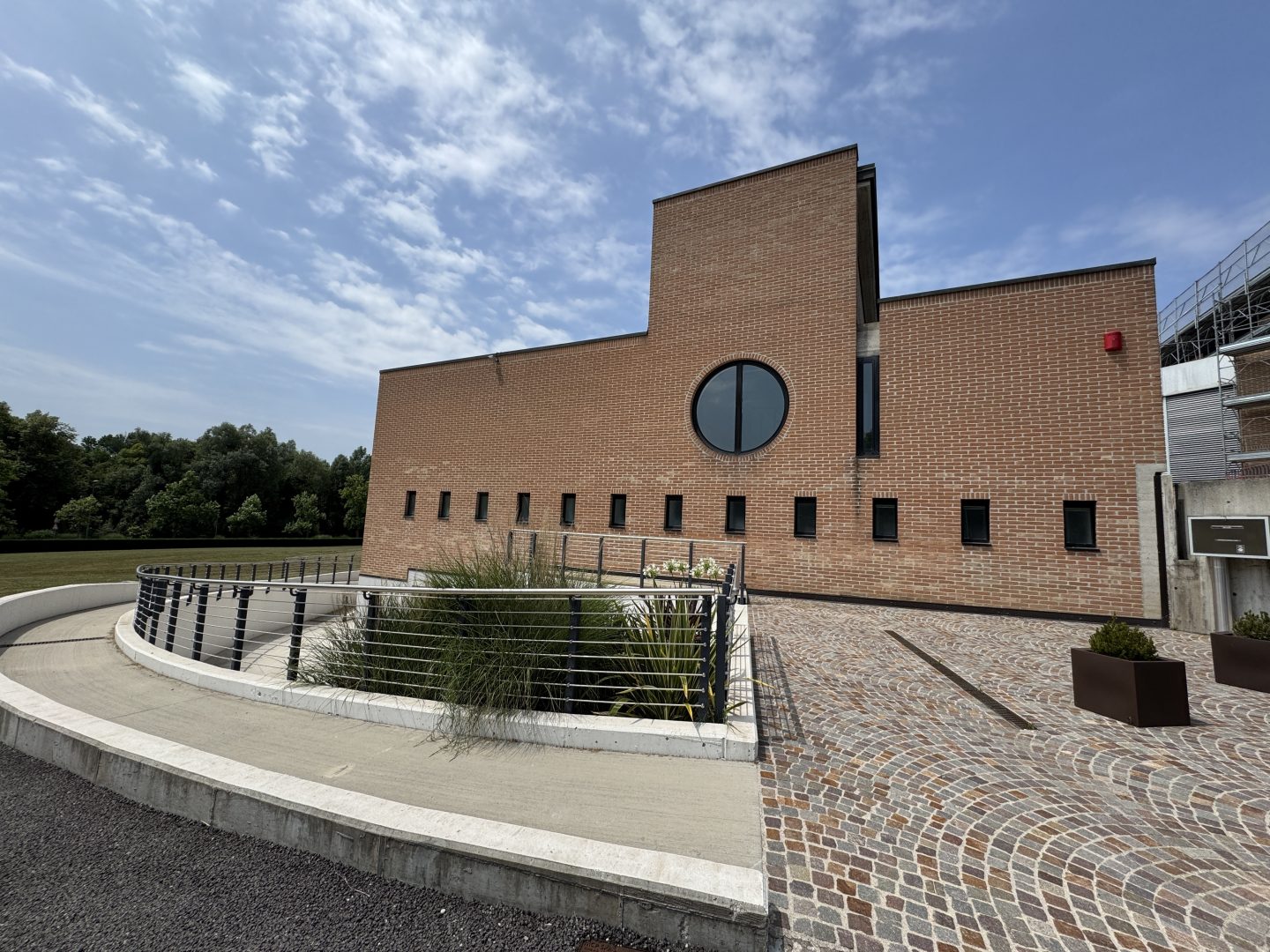
The museum complex is housed in the Centro Attività Pastorali, designed by the architect Othmar Barth in the late 1980s. In addition to the museum of sacred art — open to the public since 1995 — the complex includes a large two-level space for temporary exhibitions, a library, a photo archive and, more recently, a permanent laboratory dedicated to the conservation of historic textiles.
The museum’s collections mainly consist of works from the parishes of the Diocese of Concordia-Pordenone, enriched over time by donations, acquisitions and deposits. These include sinopie, fragments, detached frescoes, wooden and stone sculptures, paintings, drawings, prints, textiles, ex-votos and liturgical goldsmithing, from the 7th century to the present day: a rich body of material that has shaped a display organised both chronologically and by function. The result is a narrative that connects works created for liturgy with others linked to personal devotion; artworks from the Veneto-Friulian tradition — with artists such as Gianfrancesco da Tolmezzo, Giovanni Martini and Pomponio Amalteo — alongside later paintings by Francesco Guardi, Nicola Grassi and Michelangelo Grigoletti. To this are added objects from missionary contexts, which extend the perspective beyond the local area and convey the universal dimension of the Church.
Today, the diocesan museum complex is part of Pordenone Musei. The voice of the sacred joins those that tell the story, art and future of Pordenone: different paths leading to a single visitor experience.
Sapevi che…
The museum houses a workshop dedicated to the restoration of antique textiles, directed by Simonetta Giacomini. Originally established for the maintenance and restoration of liturgical vestments – artefacts that are extremely complex and delicate due to the techniques and materials used – over time it has also begun to receive commissions from outside the museum or outside the sacred sphere, such as the restoration of costumes, carpets, uniforms, drapes, tapestries and flags.